
Ar. Madhura Oke
Sr. Associate Architect | Arris Design Studio
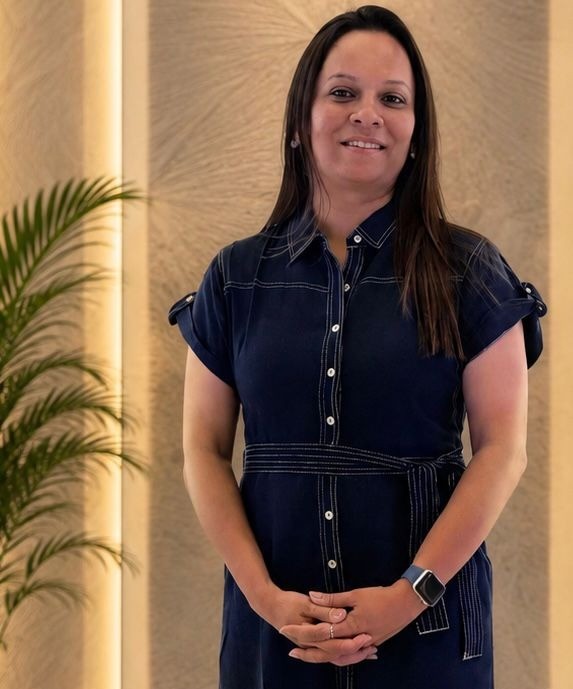
As part of our continued effort to spotlight professionals who are shaping the evolving world of design, our latest edition of ‘The Best Creator’ features Madhura Oke, Sr. Associate Architect at Arris Design Studio. With 18 years of experience spanning diverse architectural and design domains, Madhura brings together creativity, thoughtful design thinking, and a strong understanding of project execution.
Her journey has encompassed a wide range of projects, from residential developments and commercial buildings to mall spaces, multiplexes, and educational institutions. Her experience reflects a versatile approach to creating spaces that balance vision with functionality.
In this special editorial interview, Madhura shares insights into her professional journey, creative influences, project experiences, and the evolving design perspectives that continue to shape her work.
18 Years of Learning, Evolving & Growing with Design
Madhura Oke reflected on a professional journey spanning nearly two decades, shaped by continuous learning, diverse experiences and long-term commitment to the profession. She is Sir JJ School of Architecture graduate and began her career in 2006–07 and has since built a rich body of experience across the industry.
“It has been an interesting mix of things that have happened over the years, a lot of lessons learned and shared.”
Having spent the majority of her career associated with Arris Design Studio, along with a brief stint at Kapadia Associates, Madhura’s journey reflects the value of consistency, experience and evolving alongside the profession. Her 18–19 years in the industry have been a journey of growth, where every experience, challenge and lesson has contributed to her perspective as a design professional.
Turning Aspirations into Experiences
Madhura Oke explained that architectural interior design is fundamentally human-centric, with its philosophy changing across residential, commercial, hospitality, and multiplex spaces.
For residences, the focus is on understanding individual personalities, lifestyles, and comfort to create deeply personal spaces. In commercial and hospitality projects, particularly multiplexes, the aim is to create immersive environments that transport people into a different world.
She stated that architects and designers translate a client’s initial idea into reality by adding thoughtful value to it. “We are able to give their basic thought shape, along with value additions.”
Ultimately, her approach is rooted in understanding people, interpreting their aspirations, and transforming them into meaningful experiences.
From Design Intent to Project Clarity… Learning That Drives Better Outcomes
Madhura Oke explained that one of the most significant shifts in her professional journey has been understanding that effective design begins with clarity, not just creativity.
In the early years, the focus was largely on designing and moving quickly into execution. However, with experience, she learned to look beyond the design itself and understand what people truly need from a project. This meant gaining clarity on the client brief right from the outset while considering the realities of budgets, timelines, consultants, contractors, and vendors involved in bringing a project to life.
Madhura added that this clarity-driven approach has helped improve project efficiency, enabling teams to align better, make informed decisions, and ultimately deliver outcomes that are more responsive.
Beyond the Classroom: Where Real Learning Begins
Madhura Oke highlighted the disconnect between academic learning and on-field realities, emphasizing that practical experience plays a far greater role in professional growth.
She recommended that young professionals focus beyond qualifications and develop a strong understanding of execution, collaboration, and project dynamics.
“More than the paper, try to be more aware of how the execution works and how to have a cohesive approach with the many people who are part of a project.”
She explained that even similar projects can demand different approaches based on client requirements, making adaptability, curiosity, and continuous learning essential to delivering effective outcomes.
Bridging the Gap Between Design & Execution
Madhura Oke reflected on one of the most persistent challenges in architecture, the journey from concept to execution.
She explained that even when a project progresses smoothly, something as seemingly small as the unavailability of a particular material can disrupt logistics, timelines, and the overall execution process. Such hurdles can eventually impact the final outcome.
“If we foresee a few things that may come up and take care of them at the start, the challenges during execution can probably be addressed much more effectively.”
She emphasized the importance of anticipating potential challenges right from the beginning. By identifying possible execution-related roadblocks during the planning stage and addressing them proactively, architects can ensure a smoother transition from design intent to reality.
Aesthetics and Functionality Come Together, Design Truly Works
Madhura Oke believes that successful design goes beyond creating visually appealing spaces, it is about seamlessly integrating aesthetics with functionality. According to her, clients value spaces where beauty and usability coexist effortlessly, with neither compromising the other.
“The space should be functional along with aesthetics; it should not be one way only.”
She emphasized that when functionality is thoughtfully merged and encompassed within the aesthetic vision, the result is a space that not only looks beautiful but also works effortlessly for its users. For her, this balance is one of the strongest indicators of client satisfaction.
Staying Ahead with Design Inspiration and Innovation
In a constantly evolving design industry, staying updated is essential to creating relevant and efficient solutions. Madhura Oke highlighted how she actively keeps pace with emerging trends, materials, and technologies through industry-led resources.
She emphasised the growing influence of social media as a key source of design inspiration and industry updates, complemented by visits to exhibitions. Design magazines also help her discover emerging materials and applications.
“Keeping a connection with materials and technology in the industry is important.”
She explained that this continuous exchange with vendors, exhibitions, magazines, industry meets, and social media enables her to stay informed about innovations and translate them into better, more relevant design approaches.
The Power of Seeing an Idea Come Alive
Madhura Oke reflected that the most defining moments in her career are found across every project journey from the initial concept to final handover.
“Every project has its own timeline, some take six months, some two years, and others even four. But it is the everyday progress that makes the journey meaningful.”
She explained that seeing an idea evolve from thought to execution, and witnessing a client feel convinced, satisfied, and happy with the outcome, creates a sense of accomplishment.
Madhura Oke concluded that it is often these smaller milestones, continuous progress, and successful outcomes that become the defining moments of a career and keep you motivated to move forward.
AI is Changing the Industry But Not Replacing the Creator
Madhura Oke believes AI is transforming architecture and interior design by making processes faster, more flexible, and efficient. As client requirements evolve, AI helps designers visualise revisions, create quick 3D iterations, and communicate ideas more effectively.
“AI is more of a helping tool. It enhances what we already create.”
She emphasised that while AI can deliver impressive results, human creativity and direction remain essential. Designers need to guide the tool, refine its interpretations, and ensure the final outcome aligns with the intended vision.
Madhura Oke concluded that AI should be viewed as an intelligent assistant that empowers designers not as a replacement for their creativity and expertise.
Learning Architecture in the Real World : Suggestion to Aspiring Architects
Madhura Oke reflected on the gap budding architects often experience when transitioning from academics to professional practice. She emphasised that architecture goes far beyond drawings and ideas on paper, it comes alive through materials, people, execution and real-world challenges.
She encouraged aspiring architects to engage with the industry while still in their academic years, staying updated on emerging materials and understanding how they are actually used beyond what social media or digital platforms can showcase.
“Hands-on experience is essential to truly understand how materials work, where they belong and how ideas translate into reality.”
She also recommended that budding professionals undertake short internships regularly, even for a couple of months each year to gain practical exposure alongside their academic learning.
Vendors should Build Stronger Connections Between Architects & Material Brands
Madhura Oke emphasised that building material vendors need to keep architects connected beyond exhibitions and product launches.
With hundreds of products showcased at exhibitions, it can be difficult for architects to retain every detail. She suggested better product cataloguing and regular bi-monthly or quarterly updates to help architects easily revisit new materials, collections and product offerings.
She also highlighted the importance of human connections in the industry. Often, relationships with a brand are built through its representatives, and when they move on, the connection can be lost.
“Human-centric networking still matters. Connections cannot rely entirely on AI and social media.”
Madhura Oke concluded thatconsistent communication, organised product information and genuine human relationships can help vendors build stronger, long-term connections with the architectural community.
Turnkey Success Begins with Cost Clarity & Timeline Discipline
Madhura Oke emphasised that cost transparency and adherence to timelines are critical for turnkey contractors.
She explained that project requirements can evolve during execution, and architectural or design modifications may sometimes have a cost impact. While such changes may be necessary for the overall goodwill and quality of the project, contractors must communicate the financial implications at the right time.
“Any cost escalation arising from a project modification should be clearly communicated and clarified immediately, rather than being addressed at the end of the project.”
She reflected that delaying such communication can make it difficult for clients to track the reasons behind cost increases and can lead to avoidable disagreements.
Wrap-Up
Designing with Purpose
Madhura Oke’s journey reflects how design evolves through experience, adaptability, and continuous learning. For her, successful design lies in balancing creativity with functionality, ideas with execution, and technology with the human touch, ultimately creating spaces that are meaningful, practical, and built to last.