
Ar. Dimpal Talukdar
Senior Architect & Associate | Design Associates Inc.
As part of our continued effort to spotlight professionals shaping the world of design, our latest edition of The Best Creator features Ar. Dimpal Talukdar, Senior Architect & Associate at Design Associates Inc. From discovering architecture by chance to building extensive experience in healthcare design. Dimpal’s journey reflects perseverance, continuous learning, and professional growth. With experience spanning hospitals and medical colleges, he brings a practical understanding of the complexities of healthcare architecture.
In this special editorial interview, he shares insights into his journey, professional experiences, and the evolving demands of designing healthcare spaces.
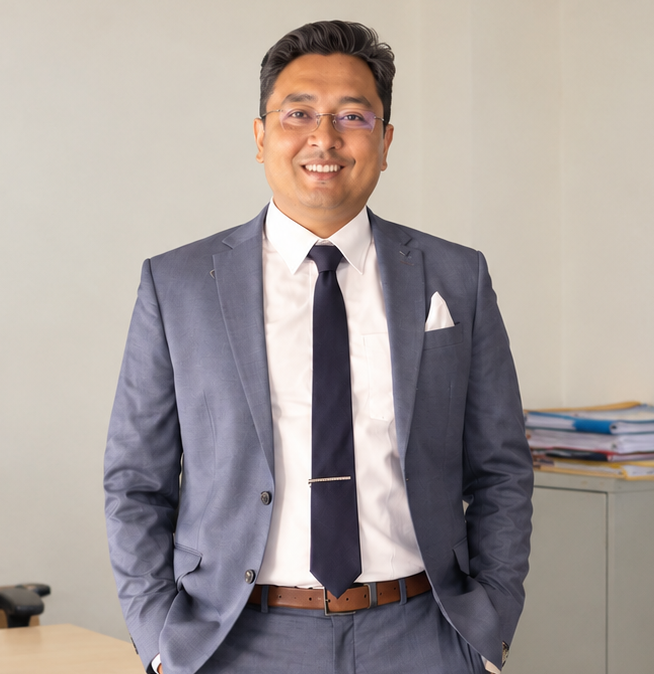
A Journey Shaped by Curiosity, Experience & Purpose
Reflecting on his journey, Dimpal Talukdar shared that architecture was initially an unexpected choice rather than a planned career path. After doing his initial studies from a small town in Arunachal Pradesh, he had very limited exposure to the field before joining the Architecture department at Jadavpur University for graduation.
“I entered architecture more by chance than by choice but gradually discovered the depth and possibilities of the profession.”
After graduating in 2009, Dimpal began his career as a junior architect at Design Associates, assisting senior architects and gaining hands-on experience in design detailing, site work, and project execution. Over the years, his curiosity and commitment helped him grow into leadership roles and take on greater responsibilities.
In 2020, he moved to Guwahati to lead projects during the pandemic, working extensively on COVID facilities, ICUs, hospitals, and medical infrastructure while coordinating with clients, doctors, and project teams.
Dimpal Talukdar stated that this journey has ultimately led him to specialize more in healthcare architecture, with his work today spanning from medical colleges campuses, hospitals, and specialized healthcare projects.
Designing Healthcare Around People
Dimpal Talukdar reflected on the philosophies that guide his approach to healthcare design. He explained that effective healthcare spaces must be shaped through collaboration, functionality, and a deep understanding of end user.
“Doctors are the experts, so they need to be involved right from day one.”
He emphasized the importance of integrating inputs from doctors, departments, staff, patients, and other end users while carefully studying emergency, radiology, circulation, and departmental interconnectivity.
Dimpal also highlighted the growing challenge of space constraints, stating that healthcare design today must balance functionality with efficient movement and segregation, from vehicles entering the campus to the distinct circulation of doctors, staff, patients, and attendants.
He concluded that the future of healthcare design lies in creating well-connected, people-centric spaces where every movement and function is thoughtfully planned.
Designing in Sync is Dimpal’s Approach to Efficient Spaces
Dimpal Talukdar reflected on how integrated planning from day one has played a key role in improving project efficiency and client outcomes. He explained that design, services, client requirements, and guidelines must progress simultaneously, rather than being addressed in stages.
“Everything needs to go parallel. You cannot make the design first and incorporate the services later, because it will affect the project at a later stage.”
He highlighted that in hospital design, especially critical areas such as ICUs, services must be planned alongside the design to ensure functionality, safety, and compliance.
Dimpal Talukdar concluded that early collaboration with the services team is an essential part of his design philosophy, enabling better coordination and more efficient healthcare environments.
Crafting Excellence: The Learning Behind Better Design
Dimpal Talukdar reflected on the learning process he believes every young designer should embrace, especially in the early stages of their career.
“In your initial days, you need to develop a strong command over your craft and understand the smallest details of a building.”
He explained that learning should begin with the fundamentals, from toilet and staircase details to gradually understanding how every element comes together like a jigsaw puzzle, eventually shaping the larger design.
For healthcare design, he emphasized the importance of learning from diverse experts. “We interact with specialists, each bringing their own perspectives on patient care, sterilization and movement.” Gathering these insights during the initial design stage helps translate real-world requirements into effective spaces.
The Challenge of Designing Through Collaboration
Dimpal Talukdar reflected on the challenges he encountered in his professional journey, particularly while designing hospitals. He explained that bringing all agencies on board at the initial stage is one of the biggest challenges, as their inputs are essential even before the design is fully developed.
“You need discussions with all the agencies at the very beginning, but practically, getting everyone on board at that stage is not always possible.”
Dimpal Talukdar concluded that balancing early coordination with the development of a refined design remains a key challenge in hospital design.
Embracing Innovation: Staying Ahead of Design Trends
Dimpal Talukdar shared that staying updated with evolving design trends requires constant learning, industry interaction, and openness to innovation. He follows industry publications, vendor updates, and new developments in building materials to understand emerging products and their potential applications.
He also highlighted that introducing new materials or ideas often requires educating and convincing clients.
“If you have to introduce something new, you have to explain the innovation very well to the client.”
Dimpal Talukdar concluded that clear communication and demonstrating the value of innovation can help clients embrace new ideas and successfully incorporate them into their designs.
A Defining Chapter of Growth and Leadership
Dimpal Talukdar reflected that the COVID-19 period became a defining turning point in his career, giving him the opportunity to step beyond architecture and take on greater responsibilities.
After moving to Guwahati, he independently started handling entire projects on his own, from client interactions, initial design to business development, administration, and finances. Though the experience was initially challenging, it pushed him beyond the comfort zone and broadened his professional perspective.
He explained that the experience strengthened his confidence, sharpened his decision-making, and taught him how to effectively build and manage client relationships.
Innovation that Speaks to Its Region
Dimpal Talukdar reflected on how innovation can shape the future of the industry, stressing that it must be rooted in its context. He explained, “Innovation should be case-specific and region-specific.”
He highlighted that materials, technologies, and design solutions for particular zone and climate may not be suitable for others.
Dimpal stated, “Understanding regional conditions will drive new innovations and inspire design ideas that are more relevant, responsive, and sustainable.”
Be Curious to Craft: Dimpal Talukdar’s Advice to Aspiring Architects
Dimpal Talukdar reflected on his journey into architecture, emphasizing that hard work, curiosity, and a willingness to learn are essential for those entering the profession. Coming from a time when awareness of architecture was limited, he explained that today’s aspiring architects have greater exposure and opportunities to understand the field early on.
He highlighted that professional architecture is very different from academic learning. While students enjoy creative freedom in design during academic years, professional practice requires architects to work within client requirements, expectations, budget and practical constraints.
“You have to have a curiosity to learn,” adding that aspiring architects must understand the realities of professional practice and be prepared to put in consistent effort to grow in the industry.
Designing for Climate is a Call for Smarter Building Materials
Dimpal Talukdar emphasized the need for stronger R&D and climate-responsive innovation among building material vendors. He highlighted that products must be developed by understanding the specific climate, region, and requirements of space.
“In regions with high rainfall and humidity, we need materials that are moisture-resistant, durable, and require minimal maintenance.”
He further explained that India’s diverse climatic conditions demand region-specific solutions. In hot and humid areas, for instance, materials and products should support natural ventilation and reduce the impact of adverse weather conditions.
Dimpal Talukdar concluded that innovation driven by climate studies, functionality, and long-term performance is essential for creating more sustainable and responsive building solutions.
Dimpal’s Advice to Contractors is Built Better
Dimpal Talukdar emphasized that contractors can create greater client satisfaction by balancing quality, flexibility, and innovations. Reflecting on his experience with government and healthcare projects, he stated, “You cannot force something onto a client, especially in healthcare; you have to have a certain amount of flexibility.”
He also highlighted the importance of staying updated, explaining that contractors must study and understand new practices and technologies to apply them effectively and deliver better solutions for their clients.
Leadership is What Walks Alongside the Team
Dimpal Talukdar believes that effective leadership is personal and cannot be reduced to simply directing or dictating tasks. For him, true leadership means being present and walking alongside the team.
“If my team is working for 15 hours, I too work with them for same time or more even if that involves assisting them in their work if I happens to complete my part earlier till the deadline or objective is achieved.”
He explained that staying connected allows him to motivate, restructure, and support the team when needed. Rather than leaving people to work entirely on their own, he believes a leader must remain present from start to finish, leading through participation rather than authority.
Dimpal concluded, “It’s not about dictating everything; it’s about being there with your team.”
Always Design Beyond Appearances
Dimpal Talukdar reflected on the common mistakes in architecture, emphasising that architecture is subjective and every building carries its own vision and purpose.
He stated, “Rather than focusing only on how a building looks, the priority should be its functionality and usability”. According to him, the true measure of good architecture lies in end user experience and good feedbacks, making functionality and user experience more important than aesthetics alone.
Wrap Up
Dimpal Talukdar’s journey reflects a belief that great architecture goes beyond creating visually striking spaces, it is about understanding people, responding to context, and designing with purpose. From healthcare environments and climate-responsive solutions to collaborative planning and people-centric leadership, his approach is rooted in continuous learning and practical understanding. His message to the next generation is equally clear: stay curious, keep learning, embrace collaboration, and never lose sight of the end user. As architecture continues to evolve, Dimpal’s perspective reminds us that the most meaningful designs are not simply seen as they are experienced, understood, and built to make a difference.